

This post may contain affiliate links, which means I may earn a small commission from purchased products at no additional cost to you. See my full disclosure here.
If you have ever planned a children’s ministry event and felt like the same names were showing up on every volunteer list, you know how heavy that can get. In a small church, it does not take long before everyone can feel when the load is resting on just a few shoulders.
The kids benefit and the event gets done, but something is missing when the rest of the congregation never steps into it. Most of the time, it is not a lack of care. It is the way the event is presented that keeps people from seeing where they belong.
A simple shift can change that. Rebranding children’s ministry events can invite the whole church to take part and spark the kind of involvement that strengthens the ministry far beyond one program.
When Children’s Ministry Events Don’t Engage The Whole Church
In a small congregation, you can feel it when the same parents and volunteers carry every event. They plan, decorate, serve, clean up, and step right back into their other ministry roles the next Sunday.
One church experienced this during a season of rebuilding. Every February, they held a large children’s ministry event packed with games, activities, and lessons. Families came. Kids had a great time.
But the rest of the congregation stayed home. The event was promoted as a children’s program, and even though the invitation technically included everyone, the language signaled it belonged only to the kids’ ministry.
The result was predictable: a few people carried the weight while the rest of the church stayed disconnected from a vital part of ministry.
The Simple Shift That Changed Everything
The turning point was not a bigger budget or a new program. It was a simple rebrand.
The February event was renamed and presented as a church-wide celebration. The activities stayed focused on children. The games and lessons did not change. What changed was the language.
That small adjustment sent a new message: this event belongs to the whole church.
Sometimes a simple change in how we present an event is all it takes to shift it from “their event” to “our event.” In this case, it unlocked the involvement of the entire congregation.
Giving Small Groups Ownership
Renaming the event opened the door. Giving small groups ownership pulled people through it.
Instead of filling individual volunteer slots, entire small groups were asked to take responsibility for specific parts of the event. One group ran a game station. Another handled crafts. Others led activities.
Ownership changed the dynamic. When people own something, they invest more deeply. They take pride in what they create.
For the kids, it meant meeting new faces outside of the regular children’s ministry leaders and building connections with more of the church.
For the core team, it lifted the pressure. They moved from carrying every detail to equipping others to lead. What had been a program run by a few became a ministry shared by many.
The Results: More Involvement and Stronger Relationships
The change was immediate. Attendance grew, but the more significant shift was in who showed up.
Senior adults who rarely saw the children outside of Sunday morning now knew their names. Parents felt supported as they watched others step in and invest in their kids.
The event became more than a program. It became a bridge.
People who served for the first time discovered they wanted to keep serving. What had once been a heavy burden carried by a few became a shared joy embraced by the church.
None of it required more money or a complex plan. The power was in making the event feel like it belonged to the entire congregation.
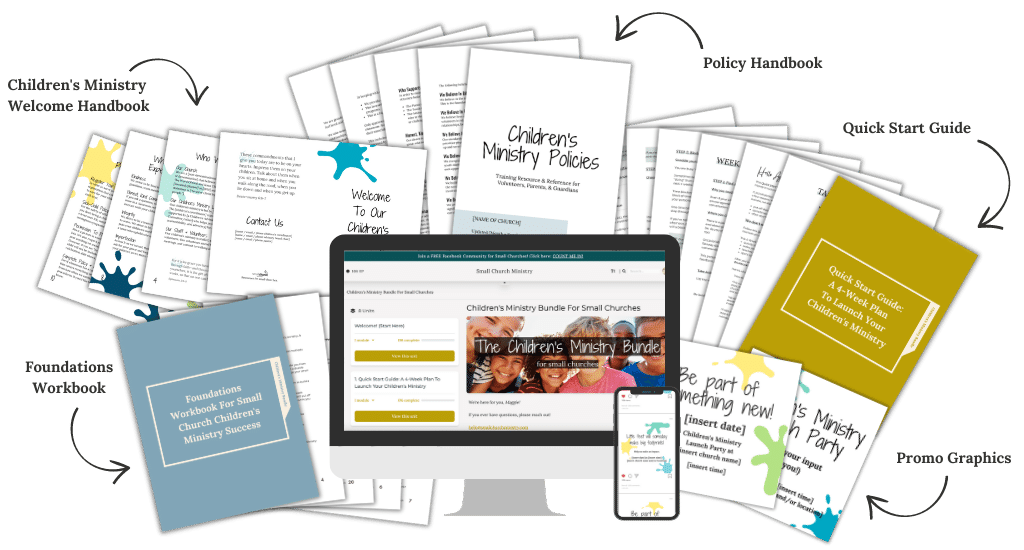
Looking for a step-by-step guide to starting or restarting your children’s ministry?
Check out the Children’s Ministry Bundle For Small Churches!
5 Rebranding Tips to Boost Involvement in Children’s Ministry Events
If you are ready to try this in your own church, here are five steps to help rebrand your children’s ministry events and invite greater involvement:
1. Look At The Language You Use
Does the name or description of your event signal that it is only for parents and kids? A simple change can open the door for broader participation.
If the language points only to children’s ministry, adults without kids may assume it is not for them. Use words like “church-wide” or “community” to make it clear that everyone is welcome. That one adjustment can shift the culture from “their event” to “our event.”
2. Invite Ownership, Not Just Help
Instead of plugging people into empty slots, give small groups responsibility for entire areas of the event. When people own something, they invest more deeply.
Assigning a group to lead a game or craft lets them serve together and take pride in what they create. It also spreads the work evenly instead of overloading the same few volunteers.
3. Highlight The Relational Impact
Share stories of connections between kids and the wider church. When people see that their presence makes a difference, they are more likely to join in again.
Mention moments like, “Our seniors had the best time with the preschoolers,” or “One of our small groups met a new family, and now they sit together on Sundays.” These stories show why their role matters.
4. Start Small And Build
You do not need to rebrand your entire calendar at once. Start with one children’s ministry event and see how the congregation responds.
A single rebranded event can create momentum without overwhelming your team. As people see the benefits, they will be eager to try it again.
5. Celebrate The Wins
After the event, publicly thank everyone who participated and share specific stories of impact.
Recognition reinforces involvement for the future. When people hear how their presence mattered, they are more willing to step in again.
A Small Change With A Big Impact
Every person matters, and in a small church, you notice it even more. When the whole congregation steps into children’s ministry, it becomes more than putting on a program. It becomes the church discipling kids together.
Rebranding a children’s ministry event may feel like a small detail, but it can unlock wider involvement and create shared ownership that strengthens the ministry.
A simple change in language can turn what once felt like “their event” into “our event,” and when that happens, the weight no longer sits on a few shoulders. The whole church carries the joy of raising the next generation together.
If your children’s ministry events feel heavy on the same few people, this is the time to ask: Does this event belong to the entire church?
That one question could lead to the small change that boosts involvement and brings new life into the ministry you are carrying.
If you want more ideas and encouragement for creating healthy, connected ministry in small churches, join the Small Church Ministry Facebook group. It is a place where leaders share what’s working, get support, and grow together.
Read More:
10 Fun Summer Games For Children’s Ministry In Small Church

