This post may contain affiliate links, which means I may earn a small commission from purchased products at no additional cost to you. See my full disclosure here.
So, you did the listening work. You joined the Facebook groups. You paid attention to what people were asking. You noticed a need that kept coming up over and over.
Now what?
This is where most of us get stuck. We see a need. We feel the pull to do something. But then we freeze because we do not know how to start. We think we need a plan. We think we need a committee. We think we need to figure everything out before we do anything.
But that is not how it works. Not in small churches anyway.
I know a pastor who went through this exact thing. She listened to her community and heard the same question again and again. People wanted a place to donate stuff locally. People needed things but had nowhere to go.
So, she did something. Not a big thing, but just a small thing, and that small thing grew into something she never expected.
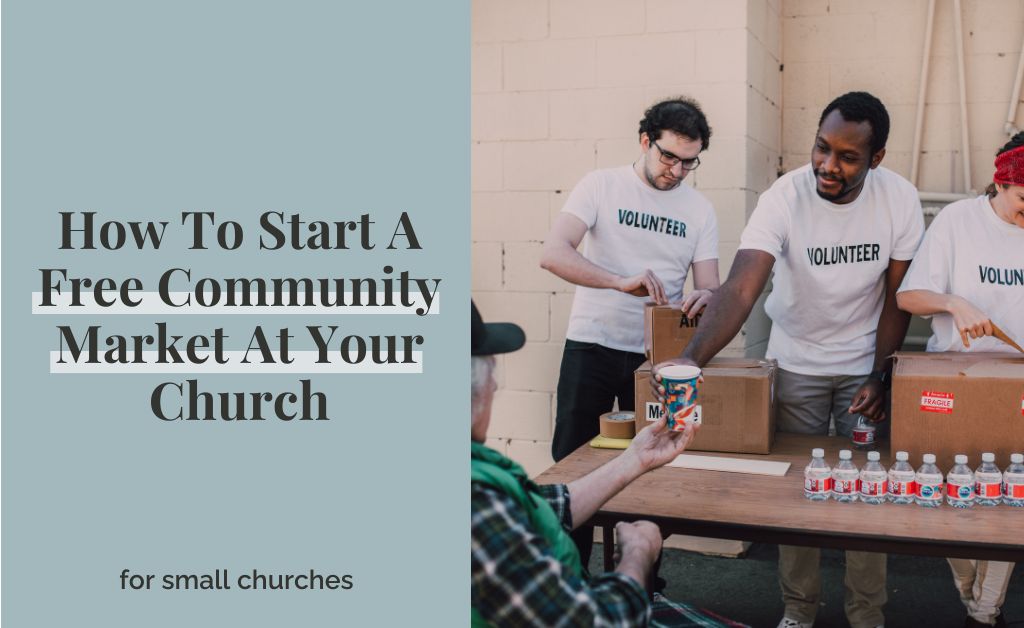
How To Start A Free Community Market At Your Church
1. Start With A Free Garage Sale
Here is what she did. She saw a post in the Small Church Ministry Facebook group about a church doing a free garage sale. And she thought, “Maybe we could try that.”
That is it. That was the whole plan.
She did not go to her church board with a ten-page proposal. She did not form a committee. She did not spend six months planning. She just thought, “Maybe we could try that.”
So they did.
They picked a Saturday afternoon. They filled the fellowship hall with stuff that people from the church did not need anymore. And they let anyone come and take it for free.
The first time they did it, the stuff spilled out of the fellowship hall, down the hallway, and into the sanctuary. There was not a space in the church that did not have items in it. They had so many donations that they had to do another free garage sale a month later.
That is the first lesson. Start small. See what happens. You can always do more later.
2. Pay Attention To What People Ask For Next
After those first two garage sales, something interesting happened. People kept emailing. Between the big sales, they would write and say, “When are you having your next one?” “I really need this.” “Do you have any idea when you’ll do it again?”
They had leftovers from the first sale. They had a space in their building that was not being used. They had tables and shelves and stuff just sitting there.
So they looked at each other and said, “What can we do with this other than just store it?”
That question changed everything.
They decided to open the space between the big sales. Just a few hours here and there. Nothing fancy. Just a way to fill the gap.
That is how the Really Free Marketplace started. Not as a grand plan. Not as a five-year strategy. Just as a way to meet the need that was right in front of them.
3. Use The Space And Supplies You Already Have
One of the things I love about this story is how they used what they already had.
They had a space that was not being used. It used to house their quilting ministry. That ministry had moved to a new spot and was doing great. So this space was empty.
They had leftovers from the garage sales. Stuff that did not get taken. Stuff that was still good.
They had tables and shelves already in the building.
They did not go out and buy anything. They did not raise money first. They just looked at what was already there and asked, “What can we do with this?”
That is such a small church way of doing things. We do not have big budgets. We do not have storage units full of stuff. But we have what we have, and sometimes that is enough.
4. Build the Market As You Go
Here is a phrase I love. They went into this thinking, “Let’s build the plane while we fly it.”
That means they did not wait until everything was perfect. They did not wait until they had all the answers. They just started and figured it out as they went.
Every week, they evaluated what was working and what was not. They paid attention to what people needed. They noticed when something was not working and changed it.
That is how you do ministry in a small church. You try something. You see what happens. You adjust. You try again.
You do not have to have it all figured out on day one.
5. Set Donation Hours That Protect Your Volunteers
Here is something practical they figured out along the way. They needed to protect their volunteers. They did not want to burn anyone out.
So, they set specific times for donations and for shopping.
They take donations three days a week:
- Monday from 4:00 to 6:00 p.m.
- Wednesday from 5:00 to 7:00 p.m.
- Thursday from 10:00 a.m. to 12:00 p.m.
The marketplace is open one night a week to the public. Wednesday from 5:00 to 7:00 p.m. That is the same time as one of the donation windows, so it serves two purposes at once.
They put up a little corrugated plastic sign outside with the donation times. Nothing fancy. Just a sign so people know when to come.
They also made a deal with the police and fire departments. If there is an emergency, like a fire or a domestic violence situation, the church will open up the space for people to get what they need. That came from relationships they already had.
6. Welcome Community Volunteers
Another thing that happened along the way. Community members started showing up.
At the first garage sale, people came in and said, “Do you need some help? It looks like you are really overwhelmed.” And they said yes. They would love some help.
When they opened the marketplace, those same people came back. They said, “We love being here. We love being with the people because we are seen as people.”
Some of those volunteers are not church members. They come from other faith communities or no faith community at all. And that is fine. They do not have to pledge themselves to the congregation to make a difference. They just want to help.
If people offer to help, say yes. Set up a simple Google Form where they can sign up and say what they are interested in doing. Let them be part of what is happening.
7. Keep Listening and Improving
Here is the thing. The listening never stops.
Even after the marketplace got going, they kept paying attention. They noticed when volunteers needed a break. They noticed when they needed more space. They noticed when community members wanted to help in new ways.
They noticed that people wanted to try on clothes, not just take whatever size someone handed them. So they set up a changing room. A try-on room. So people could shop like they would at any store.
That small change made a huge difference. It treated people with dignity. It made them feel like equals, not like they were receiving charity.
That came from listening. Even after the ministry started, they kept listening.
5 Things To Know Before You Start A Free Community Market
If you are thinking about starting something like this, here are a few things to keep in mind.
First, you do not need a big building. You just need some space. A fellowship hall. A Sunday school room that is not being used. Even a garage or a shed.
Second, you do not need to be open every day. Start with one day a week. See how it goes. You can always add more hours later.
Third, you do not need a lot of volunteers to start. Two or three dedicated people can keep a small market running. You can recruit more as you go.
Fourth, you do not need fancy shelves or displays. Use what you have. Tables from the fellowship hall. Bookshelves from unused classrooms. People care about what is free, not how it is displayed.
Fifth, you do not need to have everything figured out. Start small. See what happens. Adjust as you go.
Is this really ministry?
Yes. It is.
This is not about the stuff. It is not about the toasters or the shirts or the shoes. It is about people. It is about relationship. It is about meeting needs and loving the people God has placed around you.
That church I mentioned only has about 50 people on a weekend. But now they are known in their community. People know they are the church with the Really Free Marketplace. People know they are a place where you can get help with no questions asked.
That happened because someone listened, started small, and kept going.
Start This Month
So here is my question for you. What needs have you noticed in your community? What small thing could you try this month?
Maybe it is not a free market. Maybe it is something else. But whatever it is, you do not have to have it all figured out. You just have to start.
Try one small thing. See what happens. Pay attention. Adjust. Keep going.
And if you do, I would love to hear about it. That is what this community is for. Sharing what is working and encouraging each other to keep going.
If you are not already in our Facebook group, come join us. It is a place where small church leaders and volunteers can be honest about the struggles and celebrate the wins together. We would love to have you.
Read More:
Lead From Presence To Shift Your Church Culture

