

This post may contain affiliate links, which means I may earn a small commission from purchased products at no additional cost to you. See my full disclosure here.
Ministering to the special needs community is more doable than you think! Start with these 3 simple steps to prepare your small church for ministry to special needs visitors.
Do you feel overwhelmed at the very thought of ministering to the special needs community?
Then you’ve come to the right place! I’ve been there, and I want to share some practical steps to making it happen even in the smallest church body. Even when you have:
- No money
- No experience
- Few or no volunteers
Why Minister To Those With Special Needs?
- They are overlooked.
- They need community.
- They deserve the opportunity to meet Jesus, connect with other believers, and grow in the kingdom.
Ministering to the special needs community is not only necessary, but it is also doable!
Following are three steps to beginning a special needs ministry at your small church:
- Create a culture of awareness and acceptance.
- Train your staff.
- Make your building safe.
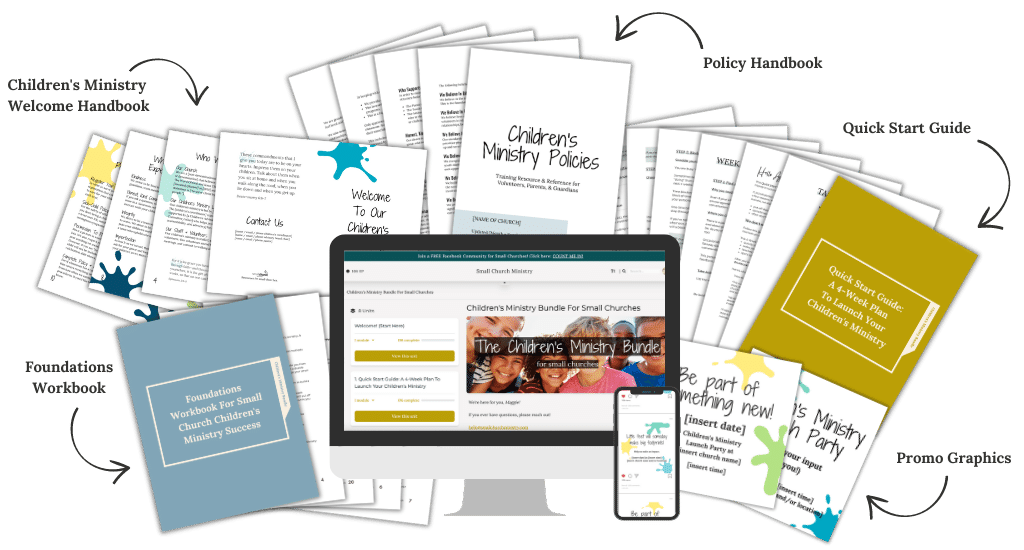
Looking for a step-by-step guide to starting or restarting your children’s ministry?
Check out the Children’s Ministry Bundle For Small Churches!
Step 1: Create A Culture Of Awareness & Acceptance In Your Small Church
Awareness and acceptance of individuals with special needs is more important than money or volunteers in a special needs ministry.
I have a close friend whose child has autism. When this child is overwhelmed with the outside world, meltdowns ensue — crying, screaming, and thrashing. Strangers often assume the child is a brat or hasn’t been parented well, and they aren’t afraid to say these things to my friend mid-meltdown! (Let’s change that!)
Increase Awareness Of Special Needs In Your Small Church
Awareness — or knowledge — of types of special needs can help prepare your small church to welcome these unique individuals and also accept them just as they are.
Easy Ways To Learn About Types Of Special Needs
- Invite church members to share their knowledge and experiences with children with special needs.
- Set up a video call with me via Small Church Ministry. ☺
- Talk to a local professional: a special education teacher, pediatrician, or psychologist.
- Watch videos: Check out Special Books by Special Kids at https://sbsk.org.
Some of the most common special needs are autism, ADHD, and Down syndrome –– so learning about these needs first may be most helpful.
Demonstrate Acceptance Of Children With Special Needs
Acceptance is receiving people just as they are. Following are some do’s and don’ts for your small church to accept children with special needs.
What To Do:
- Smile.
- Greet them warmly.
- Introduce yourself.
- Ask them to tell about themselves.
- Ask them how you can support them in church.
- Go do it!
What Not To Do:
- Stare.
- Ask “Can’t she control that kid?”
- Say “That kid is so rude/disruptive!”
- Ask “Can’t they just sit and listen?”
There are too many stories of families affected by special needs who felt rejected or ignored when visiting a church. We can shift this trend by making these families feel welcome and accepted in our small churches!
Begin To Recruit Volunteers For A Small Church Special Needs Ministry
Start to introduce your church to common special needs and then get them excited about a special needs ministry:
- Announce It: Let your church know you are ready to embark on this new ministry adventure, and then invite them to join you!
- Find Friends: Talk to those in your church who share your heart for this ministry or who are simply willing to partner with you.
- Share The Load: Notice who in your church can fulfill a specific purpose in the ministry, and also ask that they only be willing to commit to that for the time being. For example: handy work needed to prepare the building, someone who has connections to a professional who can provide training, someone talented in social media who can advertise to the community, someone who can be a designated greeter, etc.
- Consider The Kids: If your small church has children and youth ages 7 and up, then you can invite them to assist in your new special needs ministry as helpers.
Don’t Miss Out On This Blessing!
A story from my church … from dipping our toe in the water, to a special needs VBS, to baptism celebrations:
At first, when I approached my church leadership team about a more intentional special needs ministry, they were uncertain and apprehensive — but willing.
After one staff training, we were able to hold a Vacation Bible School event for children with Autism that went so well, the church leaders and our youth were ready to make it a regular event!
Less than a year later, we had the honor of seeing a mother and her daughter with special needs receive Jesus as their Savior and be baptized!
Step 2: Train Your Small Church Staff & Volunteers For Special Needs Ministry
Relax, you don’t have to be experts! Following are a few simple actions to practice:
Greet Visitors & Get Them To The Right Person
- Be on the lookout for visitors every service.
- Be the first to greet them.
- Get them to the special needs ministry leader to determine needs and support for the day’s service.
Watch the doors for visitors and be ready to approach them, greet them, and also introduce them to your church’s special needs ministry leader. The leader can then chat with them about their needs and what support they need and make it happen for the day. If you don’t have a ministry leader, decide who the coordinator will be for support during service and introduce them to the family.
A sweet family visits my church from time to time, and my church body knows to greet them and find me right away! They need our help keeping up with their son who has autism. He likes to walk around instead of sitting still, so we have a (trained) volunteer who stays right with him, side by side, and his parents can attend worship service knowing their son is being safely monitored and is truly cared for.
Manage Expectations
- You aren’t expected to cure anyone!
- Welcome them.
- Respect them.
- Get to know them.
Expect that things won’t be perfectly smooth — and that’s okay. Primarily, focus on welcoming and supporting them as best you can. Invite them to participate, but don’t force them. Let them be free to just be with you. Stay with them, talk to them, and get to know them better. Make their experience a positive one!
Execute Basic Strategies
- Ask the family what to expect.
- Let them know what to expect from you.
- Keep them safe.
- Have an emergency plan.
The family of a special needs child is the best resource for information about what to expect when caring for their child. Ask them what will help you keep their child safe and happy.
I love to use a picture schedule to let newcomers know about my Sunday school class! Keep a picture schedule of the things we do in class and the order we do them in. I show them to my visitor before we get started and refer to them often, so they know what to expect.
You can keep these visitors safe by keeping your attention on them —watch them, stay with them. Think ahead about things like wandering or climbing, and make preparations like securing doors or clearing clutter.
SOS! Plan For When You Will Need Help
- Have an extra helper with you.
- Use walkie-talkies to call for extra help.
- Text the family or another leader if there is a problem.
Invite the family to share safety information about their child with you. Have extra resources like walkie-talkies in a handy and visible location, and post the phone numbers on the wall that you will text if there is a problem, so they are easily accessible.
Step 3: Make Your Church Building Safe For Children With Special Needs
Here are some things to consider when thinking about building safety for the special needs population:
- Accessibility
- Do you have ramps for entrances/exits?
- Are bathrooms handicap accessible?
- Exits
- Which doors can be shut to prevent wandering?
- Which doors should be monitored to prevent wandering?
- Safety Hazards
- Cleaning products and chemicals are securely stored.
- Clutter is cleared and put away.
- Rooms are not overcrowded with unnecessary furniture.
- Emergencies
- Fire exit routes are posted all around the building.
- Tornado safety plan is posted all around the building.
- The church has a written plan for medical emergencies.
Get Your Small Church Special Needs Ministry Started
If you are like me, and see the need and value of a special needs ministry in your small church, it’s time to make it happen! Here are some simple action steps you can take right now:
- Tell your church leaders that you want to minister to the special needs community.
- Share this post with them!
- Start learning about different abilities and special needs in your community.
- Get in touch with me! I LOVE to support others in this mission!
May God bless you as you prepare to engage the special needs community!
Looking for a step-by-step guide to starting or restarting your children’s ministry?
Check out the Children’s Ministry Bundle For Small Churches!
Read More From Holly About Special Needs Ministry


Welcoming people with special needs and starting a ministry for them is TOTALLY doable! Great post! Excited for more to come from Holly!!!
Thanks Amy! You’re a special needs ministry rock star!
Hi, I’m a mom of a special needs adult. We have been fortunate to find a church that has supported us through her teens and now in her twenties. What I have come to realize is how isolated special needs adults and their families can become. Do you have thoughts on how to reach out to this population? I appreciate what you are doing.
Hi Katherine, I do have thoughts about reaching out to that population—look for a blog post to come! Thank you for the idea!
Katherine – hello! Holly is one main writer for special needs in small churches! I’m so glad she popped on and responded. Please join our email list so you don’t miss her new posts!
Hello I’m Kaylin youth and children’s pastor I have several ADHD in both classes as well as Autism , I’m a former preschool teacher and have taken some classes and always looking to educate myself more to understand what I need in y classroom and what I can do differently to help them learn and engage better.I have so many questions would love to talk to you more
hello! please come join our Facebook Community! it’s a great place to connect and ask questions. And mark the last Saturday of April on your calendar for our next free KidMin+Youth Ministry conference! It’s virtual and amazing!!