

This post may contain affiliate links, which means I may earn a small commission from purchased products at no additional cost to you. See my full disclosure here.
When it comes to youth ministry, volunteers are the heartbeat of your program. Whether they’re leading small groups, organizing events, or simply showing up to build relationships with students, adult volunteers make youth ministry happen. That’s why Youth Ministry Volunteer Training isn’t a luxury; it’s a necessity.
When done well, volunteer training equips both current and new volunteers with the tools and confidence they need to disciple teens effectively, create a safe and welcoming space, and support the mission of the church. Whether you’re a youth pastor with years of experience or a ministry leader in a small church doing your best with limited resources, this guide will give you practical steps to build and strengthen your training process.
This isn’t about creating another meeting for your calendar. It’s about building a foundation that will empower your volunteers and strengthen your entire youth ministry.
Understanding The Purpose Of Youth Ministry Volunteer Training
Before you start planning training sessions or printing handouts, you need to answer a foundational question: Why are we training our volunteers?
As ministry leaders, it’s important to understand that Youth Ministry Volunteer Training isn’t just about rules or roles. It’s about equipping people to disciple teens and support a healthy, thriving ministry. Taking time to clarify the purpose of your training helps you avoid information overload and focus on what matters most.
Ask yourself:
- What do I want our volunteers to feel confident doing?
- What values are most important in our youth ministry?
- What do volunteers need to know to serve safely and effectively?
When your “why” is clear, your training can be focused, meaningful, and tailored to your context.
Why Effective Volunteer Training Matters
Great training transforms your whole youth ministry. When adult volunteers feel prepared and supported, they serve with greater confidence and consistency. That kind of stability is especially important for teens, who thrive in safe, predictable relationships. Strong training also helps prevent miscommunication, burnout, and avoidable mistakes that can hurt your ministry in the long run.
Youth workers and church leaders who see training as a vital investment, rather than a burdensome task, set the tone for a culture of growth. When you cast your ministry’s vision and share the good news of how volunteers impact teens’ lives, it becomes easier for your team to value and prioritize training.
If you want to help facilitate effective volunteer training, recognize and celebrate even the small wins! Share stories of how a trained volunteer helped a student feel seen or prayed with someone for the first time. It reminds your team that training is part of life-changing ministry.
How To Build A Strong Youth Ministry Volunteer Training Process
A strong training process goes beyond a single meeting and involves having a strategic system.
The best way to equip your small group leaders and youth ministry team is through intentional planning. While you may not have the resources of a large church, a simple and consistent plan goes a long way.
Here’s a basic framework you can adapt:
- Initial Onboarding: An intro session to cover the essentials. If you’ve created (or are in the process of creating) a handbook with policies, procedures, expectations, etc., this would be the right place to share that.
- Ongoing Touchpoints: Monthly or quarterly check-ins with brief training pieces.
- Team Gatherings: Occasional team-building events that include encouragement, fellowship, and development.
- One-on-One Support: Personal conversations with volunteers to offer feedback and care.
Training should be clear, repeatable, and accessible. As you develop your system, you can create a simple handbook or digital document that outlines expectations, safety procedures, and key ministry goals.
As we prepare to dive into the elements that are important to include as you build your training process, please note that while there are some best practices included, there are no “exact solutions.” Because Small Church Ministry reaches across denominations, socio-economic statuses, cultures, etc., these essential elements are broad rather than getting into specific issues or challenges that your teens may be facing or how you should answer them in accordance with your church’s specific beliefs and traditions.
If you need an exact answer, please seek counsel from your senior pastor, leadership board, denomination representation, or someone else who would be familiar with your church’s beliefs and policies.
With that caveat in place, let’s dive in!
6 Essential Elements Every Youth Ministry Volunteer Training Should Include
1. Clear Role Expectations
Every volunteer should know what’s expected of them before they show up. Define the responsibilities of small group leaders, event chaperones, and support roles. This matters because clarity prevents confusion and sets the foundation for accountability. Before recruiting volunteers, create brief role descriptions for each volunteer position, including things like what they should (and shouldn’t) do during youth nights.
2. Safe And Secure Ministry Practices
Volunteers need to understand how to protect teens and themselves. This includes everything from background checks to appropriate boundaries. Safety isn’t optional; it’s a moral and legal responsibility (and chances are your insurance has some requirements you need to fulfill in order for them to cover you in the case of an issue or claim being made).
If you need help developing these practices, a good place to start is with a conversation with your insurance company. They can inform you of some of the basic requirements they want to see in place to reduce liability. These can include supervision ratios, reporting procedures, and digital communication boundaries. As you train your volunteers, you can use real-life scenarios to help volunteers apply safety principles in context.
3. Relational Ministry Skills
At the heart of youth ministry is relationship. It may seem like a no-brainer, but it’s helpful to teach volunteers how to connect with students through listening, empathy, and consistent presence. If you have hopes of reaching and teaching your students with the hope and love of the Gospel, it has to start with relationship. Students won’t care what we know until they know we care.
Practically, this looks like teaching your volunteers active listening techniques, encouraging them to “show up and stick around” even when teens seem uninterested, and intentionally ensuring teens are not falling through the cracks.
4. Small Group Leadership
Small groups are where discipleship often takes root and can be a vital part of real, lasting growth in the spiritual life of your youth. If you use small groups in your ministry, your leaders need tools to lead discussions, ask good questions, and create safe spaces for sharing.
When training your volunteers, coach them on how to create and enforce appropriate boundaries for small groups (such as honoring group safety and not dominating the conversation), give them tools for getting back on track if the conversation strays, and provide a framework for how to handle tough conversations with grace and truth.
Encourage adult volunteers to prepare for small groups ahead of time by reading through any prepared discussion guides, questions, and Scriptures.
5. Youth Culture Awareness
Today’s teens are navigating challenges that many adults didn’t face at their age. While volunteers don’t need to know every trend, they should understand the pressures teens face and how to respond with empathy.
There are several key issues that almost certainly affect your youth, such as anxiety, identity, technology/social media, and relationships. Provide gospel-centered ways that your volunteers can respond when these issues arise. The exact response should align with and respect your church’s or denomination’s specific beliefs. Training on specific issues can be done through curated resources or by inviting a guest speaker for a short training.
6. Vision And Values Of Your Ministry
Don’t assume your volunteers know your ministry’s mission or what matters most. Repeating your vision helps create alignment and unity.
A team that shares the same heart serves more effectively together because they know who they are, what they’re doing, and why they’re doing it. It’s a great idea to revisit your mission regularly, share it at each training or gathering. Put it front and center in any resource you create. Use short stories and examples to illustrate how your values play out in real life so that it’s not just a concept on paper but a living, breathing, active part of your ministry.
Making Youth Ministry Volunteer Training Practical And Relational
Training should never feel like a lecture. It should feel like real life because it’s for real life. The best youth ministry volunteer training is practical, hands-on, and relational. Role-play awkward situations. Share real stories from past youth nights. Invite experienced leaders to share what they’ve learned.
When volunteers see how training connects to the situations they’ll actually face, they engage more deeply and retain more information.
You can help new volunteers, especially if you have several at once, feel more prepared by doing a “mock youth night” where they practice leading games or small groups.
I mentioned before about ongoing touchpoints. One suggestion is to host roundtable discussions where volunteers can ask questions and learn from one another. This helps reduce the amount of work you need to prepare a full training and increases the relational aspect of recognizing that you’re all in this together (and are probably experiencing similar things with your youth).
Creating Ongoing Support For Youth Ministry Volunteers
Remember, training shouldn’t end with onboarding. Volunteers need ongoing support to stay encouraged, grow in confidence, and avoid burnout.
Offer short follow-ups after a few months. Check in one-on-one to see how new volunteers are doing. Create a rhythm of continued learning through team huddles or shared resources.
Practically, this can look like sending out a “Volunteer Newsletter” with updates, tips, and encouragement, or sharing a monthly 5-minute training video that addresses a real-life issue. You could also have a group text with all your volunteers where you send encouragement or provide a place to ask questions.
Volunteers who feel seen and supported stick around longer and serve better.
Encouraging Spiritual And Personal Growth Of Volunteers
Volunteers are so much more than ministry tools. They’re people who need discipleship, too.
Youth Ministry Volunteer Training should include more than just logistics. Build in space for prayer, reflection, and spiritual encouragement. A healthy volunteer team creates a healthy ministry environment for teens.
Make sure that you start training meetings with a short devotion or time of prayer. Provide space for volunteers to share how they’re growing in their own faith. Offer support for newer volunteers by pairing them with a mentor for spiritual encouragement and practical guidance.
When adult volunteers grow spiritually, they’re better equipped to guide students toward Jesus.
Start Simple And Stay Consistent
Intentional youth ministry volunteer training isn’t about perfection; it’s about being clear, consistent, and committed to growth.
When you invest in your adult volunteers through training, support, and encouragement, you’re investing in the next generation of the church. Even small churches with limited resources can build strong teams by training with purpose.
Looking for a step-by-step to starting or restarting your youth ministry?
Check out the Youth Ministry Bundle For Small Churches!
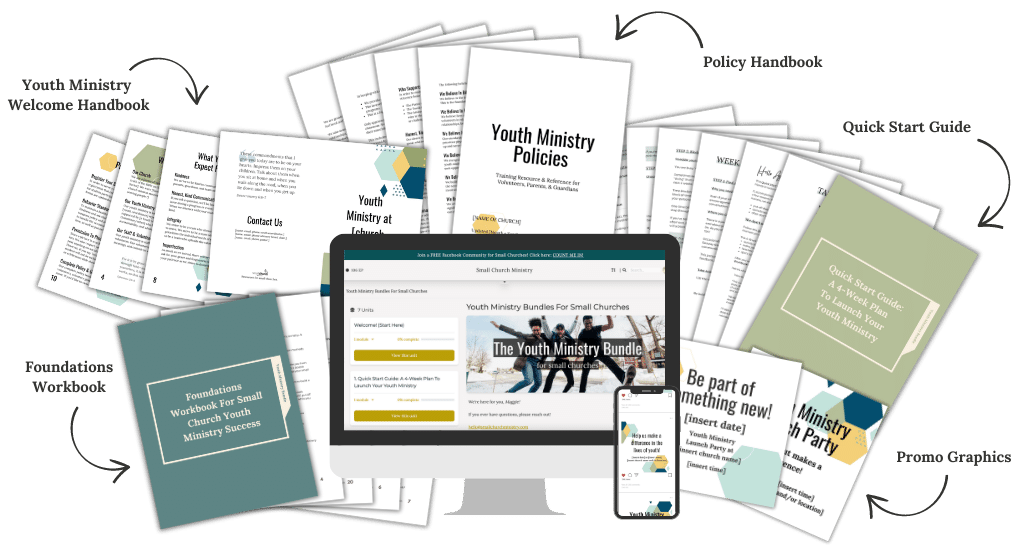
It’s designed with small churches in mind and includes training content and resources you’ll need to get started. You don’t need to do everything, but doing something matters.
If you want to keep growing after your Youth Ministry Volunteer Training, join our free Small Church Ministry Leaders Facebook Group to connect with other youth ministry leaders, share ideas, ask questions, and get encouragement all year long. Together, we can help each other serve better and reach more students.
Let this be the year your team feels confident, connected, and called.
Read More:
12 Fun Youth Ministry Icebreaker Games for Small Churches
12 Monthly Youth Ministry Teaching Themes for Small Churches

