

This post may contain affiliate links, which means I may earn a small commission from purchased products at no additional cost to you. See my full disclosure here.
Are you struggling to keep children’s attention or activity levels under control in your children’s ministry? Read on as teacher and behavior analyst Holly explains why movement in children’s ministry is important and how to make it work in your Sunday school.
Why Including Movement In Children’s Ministry Is A Good Thing
Do you ever feel like the majority of your time in children’s ministry or Sunday school is spent telling children to sit down or be still? You are fighting a losing battle!
Children were made to move, and science has demonstrated that children learn best through play. We can be more effective in our children’s ministry when we accept that children need to move around and make it work for us!
Incorporating movement in your children’s ministry can …
- meet the needs of children
- make your lesson more effective
- decrease behavior challenges
How To Avoid Chaos When Incorporating Movement
Including movement in your children’s ministry doesn’t have to mean letting children run wild and crazy! When there is a plan in place and plenty of opportunities to prepare and practice, children can thrive with movement activities, and so can you!
Types Of Movement You Can Include
- Movement in games/activities
- Moving from place to place in the children’s ministry room
- Movement during worship
You don’t have to pick just one! I love to include movement in games and activities after a lesson, as well as moving to different places or in different positions in the classroom and giving students time to wiggle and dance during worship!
When you are planning lesson activities that incorporate movement, start out short and sweet. You want to be able to quickly explain the rules to the children, model your expectations for them, and give them a couple of practice opportunities so that you are all prepared for the activity. Be ready to repeat instructions as necessary and look for opportunities to praise children who are making a good effort or meeting expectations!
Check out idea #2 when you’re helping your students memorize a Bible verse: 15 High Energy Games For Small Church Children’s Ministry
Keep Children Engaged: Include Movement
I highly recommend moving around the room during ministry activities. This can keep children engaged and provide enough movement so that behavior challenges are at a minimum. For example, we may start our time together by playing with Play-Doh at a table. Then, we stand up for worship. Then, we sit on a carpet for a story. It’s then back to the table for a snack and up again for a game. Children need to move, and doing it in a structured way like this helps meet that need without everyone bouncing off the walls! The more you practice a routine like this, the more successful it will be, and your children will get used to it.
If you need a quick game at the last minute to fill in time, try one of these 8 Quick Games For Sunday School When The Pastor Goes Over.
Give Clear Guidance On Movement Expectations
When encouraging movement during worship, set ground rules, and practice, practice, practice! It may be ok to dance, but not to run. Maybe it is ok to use a flag or instrument but not to touch others. Remember, it should be ok to sit down or stand still as well. You can’t physically make a child worship the way you would like, and you want to respect their space.
How Movement Helps Behavior In The Classroom
Children need to move, period. We all win if we provide that opportunity in a safe and structured way. We can provide structure and routine by planning and teaching expectations. Model what we want to see and praise and reward when children give their best effort and meet expectations. We can use movement-based activities to engage children in lessons and help make learning meaningful.
Incorporate ideas from 3 Ways To Stop Disruptive Behavior Before It Starts In Your Small Church Children’s Ministry to bring movement into your lessons.
When children know what to expect, know what is expected of them, and when they can move about safely, they have less need to act out. For a more peaceful children’s ministry, incorporate movement!
If you have questions, you can find me in the Creative Solutions for Small Churches Facebook community!
Looking for a step-by-step guide to starting or restarting your children’s ministry?
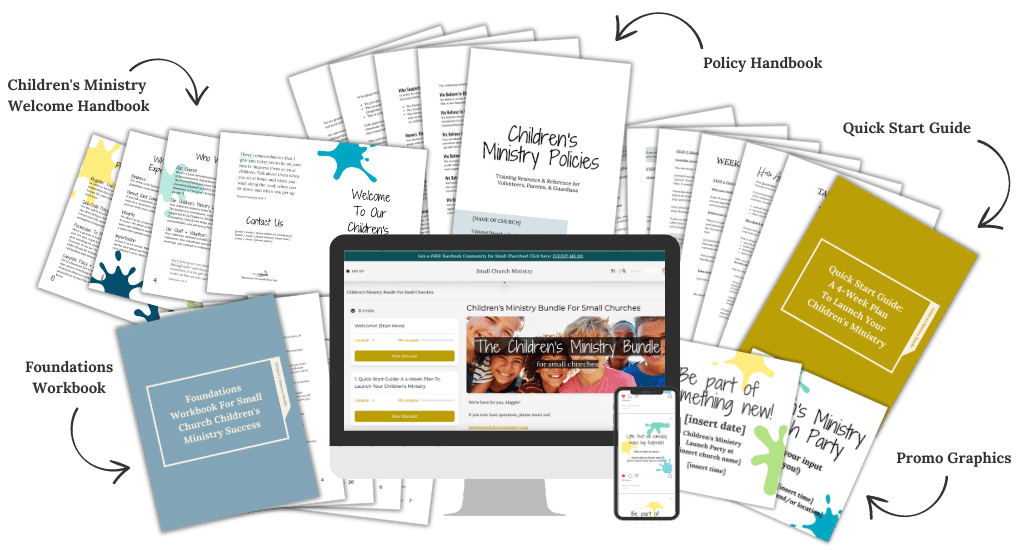
Check out the Children’s Ministry Bundle For Small Churches!
Read More
Behavior Management In Children’s Ministry For Small Churches
Behavior Management: Identifying Behavior Patterns For Small Churches

