

This post may contain affiliate links, which means I may earn a small commission from purchased products at no additional cost to you. See my full disclosure here.
As a children’s ministry leader, one of your most rewarding responsibilities is crafting engaging lesson plans that help children grow in their faith. Developing effective Sunday school lessons is essential for fostering spiritual growth and understanding of God’s Word. Whether you’re starting from scratch or looking to enhance your existing plans, this guide will provide you with insights on creating a Sunday school lesson plan that is full of adaptable, engaging lessons that resonate with kids. Here’s a five-step approach to help you get started.
A Look Into The Process
Creating your first lesson plan may feel time-intensive, but once you establish a rhythm and find activities and approaches that engage the kids, the process becomes more intuitive. Each lesson will refine your style and help you build adaptable, effective lessons that connect with children and make a lasting impact.
What Makes A Good Sunday School Lesson Plan?
A good Sunday school lesson plan is purposeful, age-appropriate, and engaging. Start with a clear Bible lesson and choose a memorable Bible verse that ties directly to the lesson’s main point. This focus will help guide the entire class, from storytelling to activities. Incorporating interactive elements, such as crafts or small group discussions, keeps kids engaged and makes the lesson memorable. Discussion questions should encourage kids to think personally about the story, helping them connect the message to their own lives.
Also, make the plan adaptable—sometimes unexpected questions or different class sizes mean adjustments on the spot. Close with a brief application to encourage kids to live out the message, and end in prayer, asking for God’s help in understanding and applying what they’ve learned. With this structure, your lesson plan will be clear, flexible, and impactful, helping children grow in their faith and understanding.
6 Steps Toward Creating An Effective Sunday School Lesson Plan
1. Starting Point With A Bible Lesson Focus
Begin with a clear Bible story or passage—Old Testament stories like Noah’s Ark or New Testament accounts of Jesus Christ’s miracles are great foundational lessons. Decide on the main point you want the kids to remember.
2. Choosing A Bible Verse
Choose a short, memorable verse that reflects the main theme of the lesson. This verse acts as the “hook” that kids can recall easily, so they can carry the message with them. For example, Proverbs 3:5 for a lesson on trust or John 3:16 for God’s love.
3. Building The Lesson Structure
Effective Sunday school lessons should have clear, engaging segments. These might include:
- Bible Study: Make this a time to explore the story together.
- Discussion Questions: Use open-ended questions that allow children to reflect and connect. Think about questions like, “How would you feel if you were in David’s shoes when he faced Goliath?”
- Small Group Activities: Divide into groups to discuss and pray. This fosters connections and builds community.
4. Incorporating The Holy Spirit
Explain how the Holy Spirit helps guide and comfort us. Depending on age, use creative ways to describe this. Younger kids might connect with the idea of a “special friend” that Jesus sent to help them, while older kids could explore how the Holy Spirit guides decisions and actions.
5. Adaptability For Class Size
Sometimes you have a big class; sometimes it’s just a handful. Adaptability is key. For larger groups, break into small groups to discuss, which keeps everyone engaged. For smaller classes, focus on deeper discussions and allow each child to share.
6. End With Application And Prayer
Close the lesson by helping kids apply what they’ve learned to their lives. Guide them in a short prayer, asking Jesus to help them remember the main point throughout the week.
Looking for a Sunday school curriculum built for small churches?
We recommend Two or More™—a low-prep, Bible-rich curriculum created specifically for small churches. It works with mixed-age groups, flexes to fit whoever shows up, and makes it simple for volunteers to lead. Learn why we love it here.

Already using it? Check out our Two or More™ video guide for practical tips to get the most out of every lesson.
Consistently Prioritizing Adaptability
To build adaptability into your Sunday school lesson plan, design activities that work well in both large and small groups. For example, plan a Bible study discussion that can either be done all together or split into small groups if more children arrive than expected. Choose flexible crafts and games that don’t require specific team sizes—simple activities like memory verse matching, which can be played individually or with partners, work well here.
Prepare a few “expansion” and “contraction” options for each part of the lesson. If you have a larger group, you might assign small group leaders for discussions or break into pairs for activities. For smaller groups, allow time for more in-depth discussion and personal sharing, making the lesson feel intimate and meaningful. Also, keep a couple of short, flexible filler activities on hand, like a quick game, song, or recap, in case you need to adapt the timing. With these adaptable components, your lesson will be ready to flow smoothly no matter how many kids show up.
In conclusion, remember that creating an adaptable lesson plan is an incredible opportunity to serve and inspire the kids in your ministry, even when attendance is unpredictable. By keeping a central Bible lesson and a few flexible activities ready, you’ll be equipped to make a meaningful impact, no matter the group size. Trust that God will guide you in each moment, providing what’s needed for each child to connect with the message. With every lesson, you’re planting seeds of faith and understanding that will grow over time. Keep going, you’re making a difference!
If you are looking for a place to connect with other leaders who understand the journey, our Small Church Ministry Facebook group is a great spot for encouragement, shared wisdom, and real conversation as you lead. And when you are ready to go deeper, Everyday Influence is there to help you keep growing. It gives you live coaching, practical ministry skills, and a supportive community so you can lead with more clarity and less exhaustion.
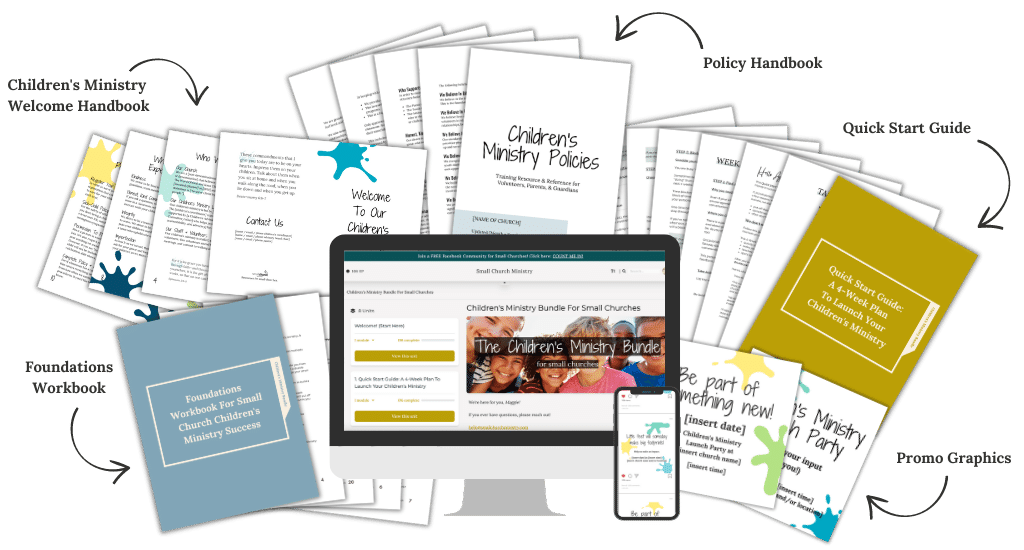
Looking for a step-by-step guide to starting or restarting your children’s ministry?
Check out the Children’s Ministry Bundle For Small Churches!
Read More:
5 Helpful Tips To Plan Your First Children’s Ministry Event
New Sunday School Tips For Building Deeper Connections
Sunday School Tips For Kids’ Discipleship – Small Church Ministry

McKinsey Jones is a busy wife, and homeschool mama of 3. When she’s not reading and reviewing books on IG, she’s an Editor & Layout Artist for Harvest Creek Publishing & Design, as well as an actress, playwright, and director at Curtain Call Cafe. Above all, alongside her husband, Andrew, you will find her loving and pastoring in kids ministry at Grace Church Willis. Her heart is for the community, for children, and for worshipping her Savior.
